
If you already make sales but finding the next customer depends on improvising, posting more, or answering messages all day, you may not need more effort. You may need to find where opportunities are getting stuck.
Before spending more on advertising, review what you offer, how people find you, and what happens between an inquiry and a sale. Also check your remaining margin and capacity. Start with one problem.
The short answer
To make more sales, review how prospects reach you, what value they see in your offer, and what happens before they buy. Also check whether each sale leaves enough margin. This map helps you choose where to start.
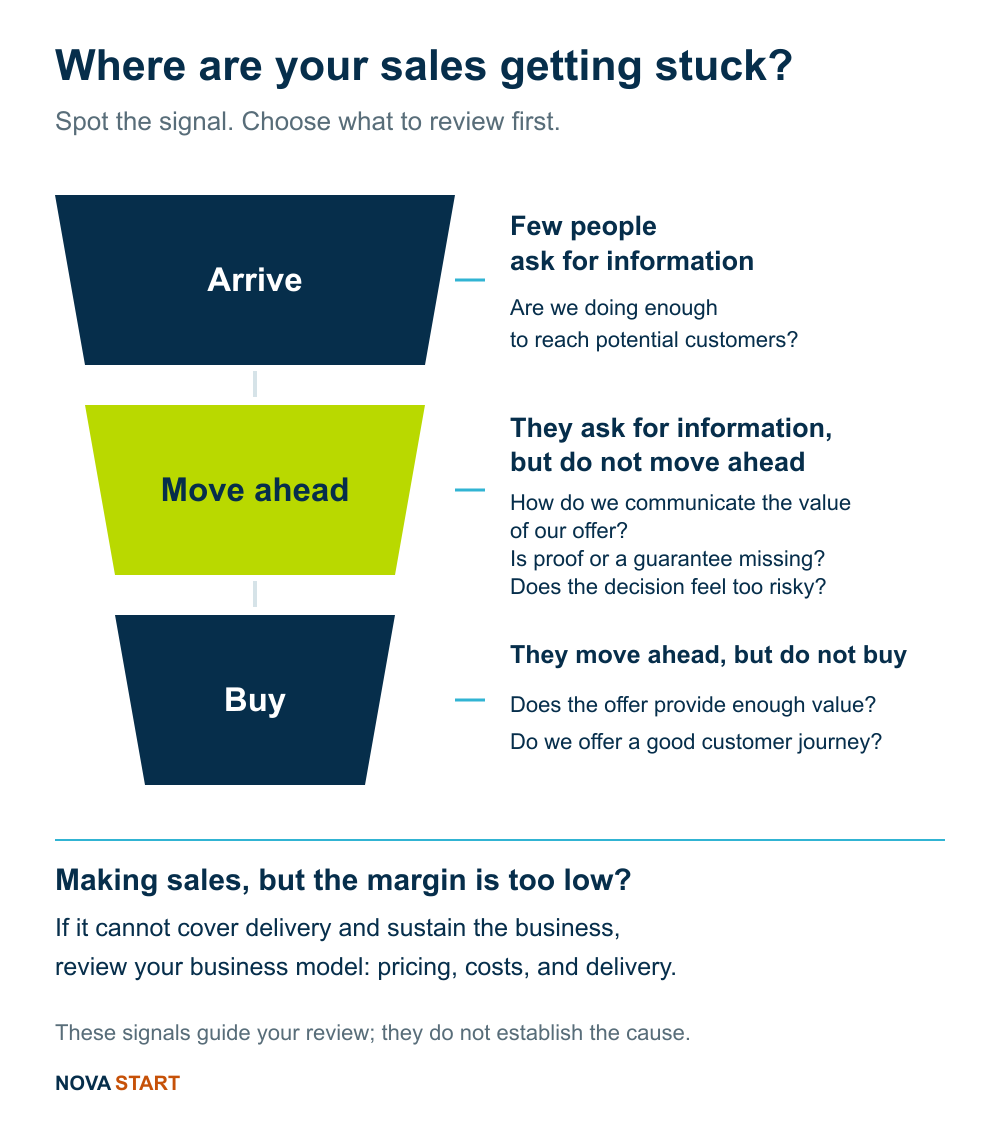
Review your last ten prospects, whether they bought or not. Look for repeated patterns and missing information.
1. Is your offer clear?
Your offer should say who you help, what problem you solve, what the service includes, what it costs, and how to begin. A list of services and prices can still leave questions.
Try this sentence: “I help [person] with [problem]. My service includes [scope]. To get started, [next step].” Compare it with the questions prospects ask. Repeated questions show what needs clarifying.
Promise what you can deliver. If the result also depends on the customer or another company, explain that from the start.
2. Are the right people finding you?
Review where prospects come from: referrals, Google, social media, ads, or partnerships. You do not need to be everywhere. Choose where potential customers are and what you can maintain.
Useful content can answer questions before a purchase: what your work includes, what changes the price, how to prepare, or which mistakes to avoid. Before posting more or paying for another ad, ask what question it answers and what the person should do next.
When I started selling cars, I posted a vehicle in a Mexican community group in Vancouver and received a negative response. Later I tried sharing useful information about insurance and mentioning my work at the end. That taught me to build trust before offering a product; it does not mean every helpful post brings sales.
3. What happens between inquiry and sale?
Review each step:
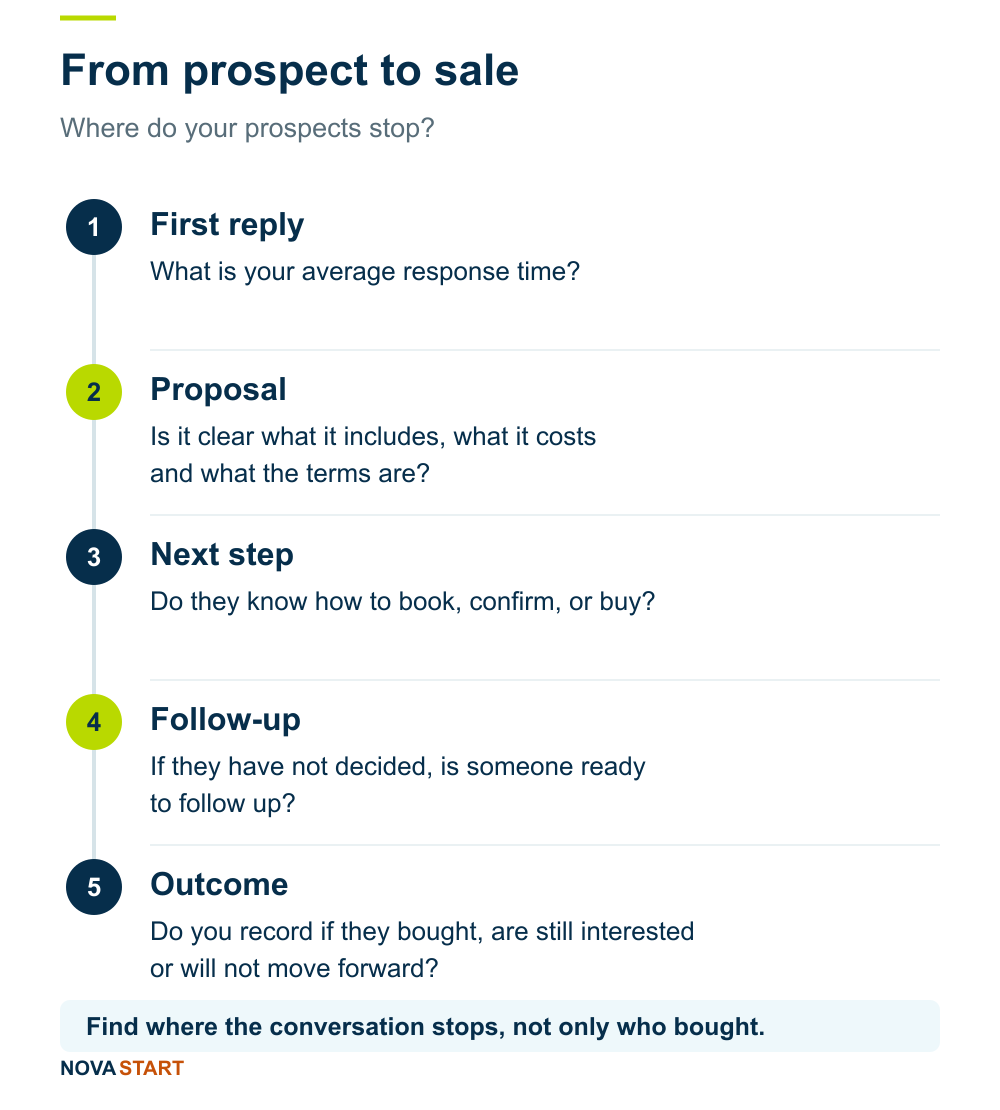
Do not assume that someone who stops replying has no money. They may be comparing options, have questions, or need a different date. Ask when possible and record what you know.
In my sales work, I started using an Excel sheet to record prospects and follow up. It made contacts and pending conversations visible. A simple record you use is more useful than a tool no one keeps updated.
The exercise: review your last ten prospects
Include buyers and non-buyers. If you have fewer than ten, use the cases you have and note their dates. You do not need names or personal information; number the cases.
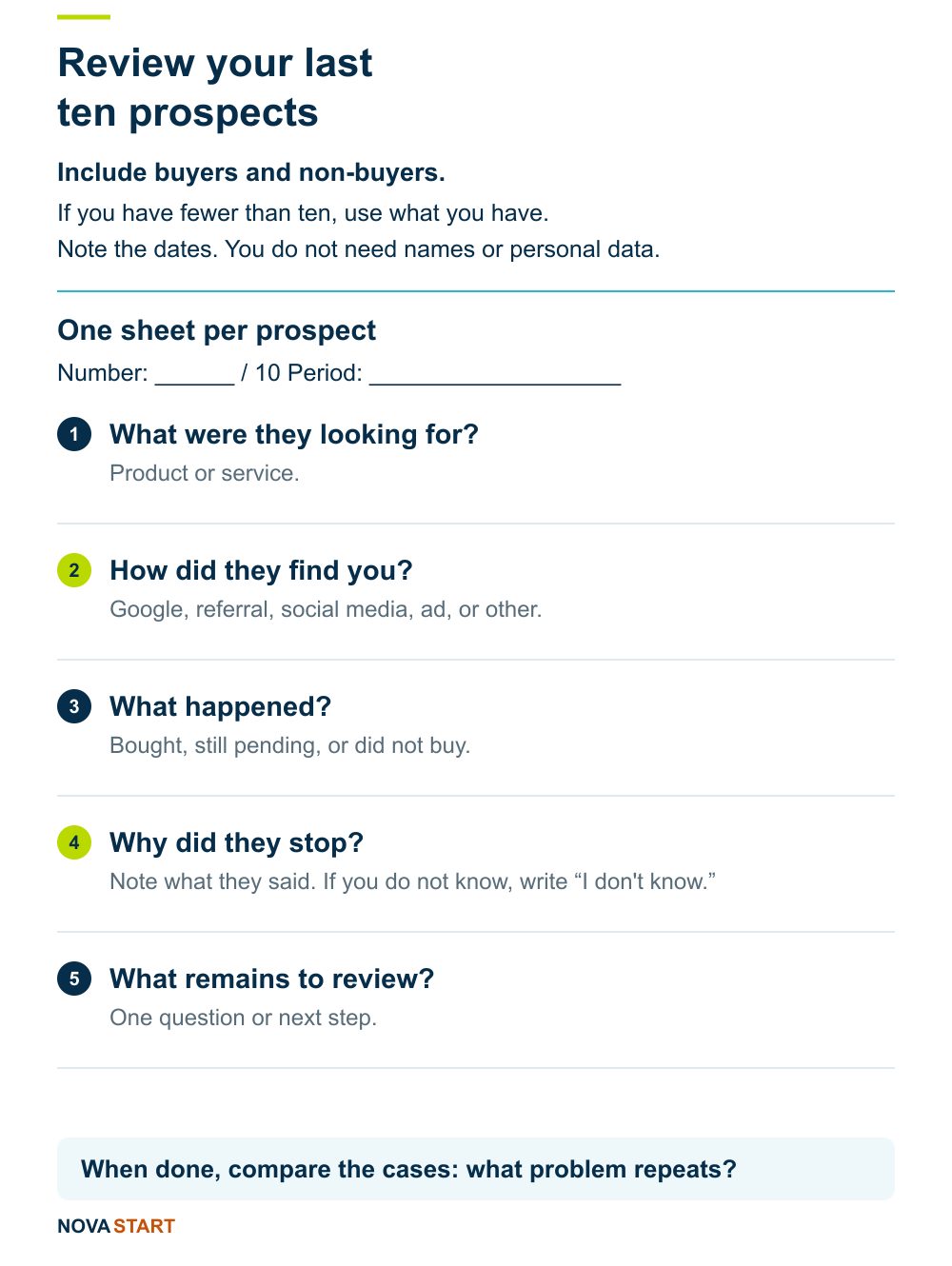
Open the table to record your prospects
| Prospect | What were they looking for? | How did they arrive? | What happened? | Why did they stop? | What needs review? |
|---|---|---|---|---|---|
| 1–10 | Product or service | Google, referral, social, ad, or other | Bought, pending, or did not buy | What they said; if unknown, write “I don’t know” | One question or next step |
Use this sequence: what is happening → what do you know → what will you test. Write down missing information before spending money.
A simple seven-day plan
Day 1: Gather your last ten prospects.
Days 2–3: Record their source, need, outcome, and any repeated problem.
Days 4–5: Choose and prepare one change: clarify the offer, simplify the proposal, or organize follow-up.
Days 6–7: Use it and record what happens.
Do you notice a pattern? At which step do you lose the most prospects? If you need help analyzing it, we can help.
Selling more does not always leave more money. Review what you charge, what delivery costs, and whether you can serve more customers without delays or mistakes. Start with one problem, one change, and one observation.
Want to review what you found?
Tell us what you sell, how prospects reach you, and where they stop. Novastart offers tailored solutions to help you attract more customers and improve your sales process. Let’s start by understanding what your business needs.